
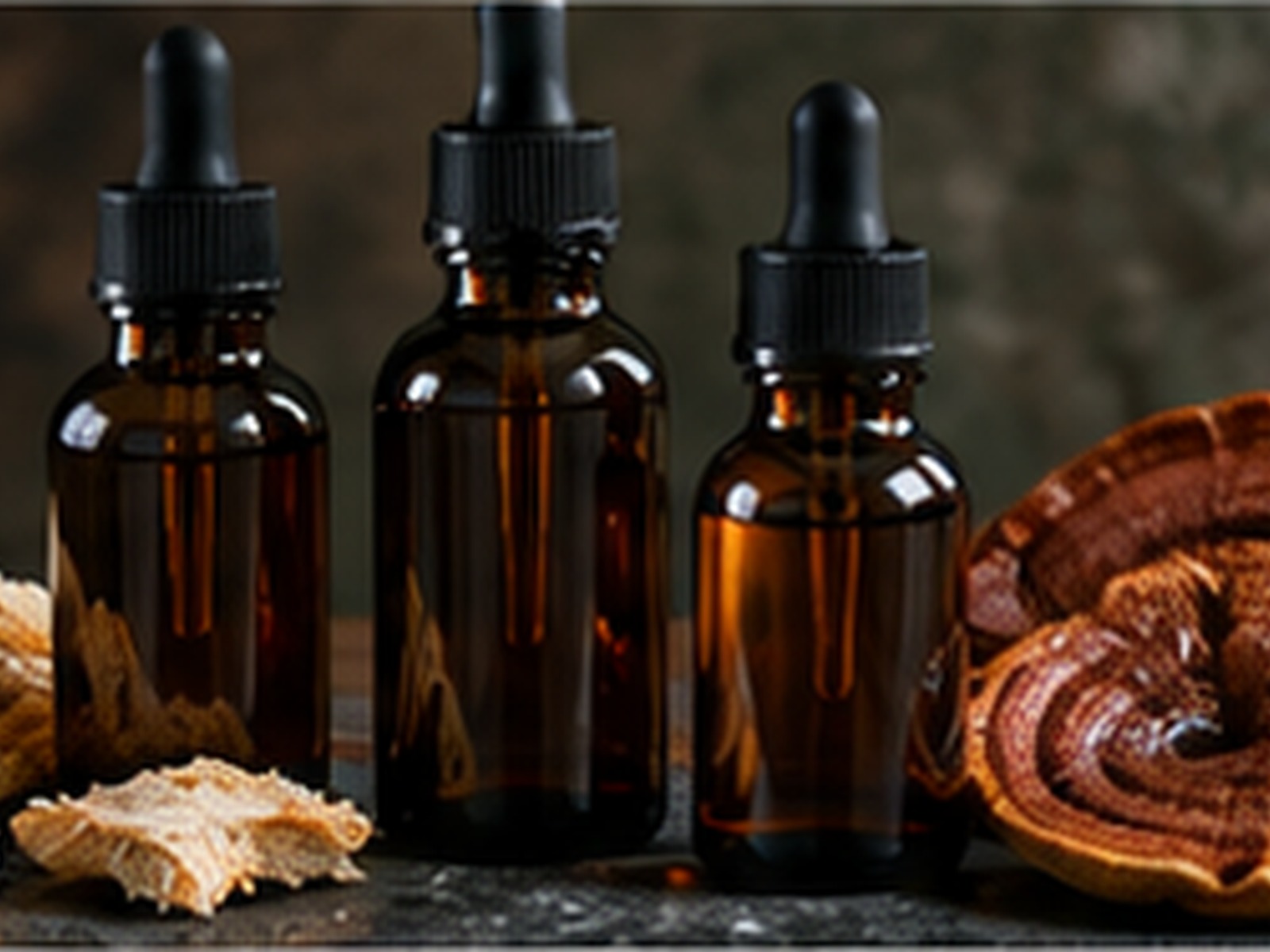
Most mushroom tinctures you will see described as “dual extract” or “double extract”. It is not just a marketing phrase: it describes a two-stage process designed around the unusual chemistry of fungi. This article explains what dual extraction is, why it is used, how our tinctures are made, and how to read the numbers on a tincture label.
The problem: fungal cell walls
Plant cell walls are made mostly of cellulose. Fungal cell walls are different: they are built largely from chitin, the same tough material found in insect shells, woven together with polysaccharides. Chitin is hard for the human gut to break down, so many of the compounds inside a mushroom are not easily released just by eating it dried or raw. Extraction is a way of getting them out.
Why one solvent is not enough
Mushrooms contain two broad groups of compounds that behave very differently:
- Water-soluble compounds, especially polysaccharides such as beta-glucans. These dissolve in hot water but tend to clump and drop out of solution in strong alcohol.
- Alcohol-soluble compounds, such as the triterpenes found in reishi and chaga. These dissolve poorly in water but readily in alcohol.
A water-only extract misses most of the second group. An alcohol-only tincture misses much of the first. Dual extraction uses both.
How our tinctures are made
Our tinctures, made in Dorset under the Spore & Bloom label, use a two-stage process built around laboratory extraction methods rather than simple soaking.
1. Soxhlet alcohol extraction. Dried, broken-up fruiting bodies are placed in a Soxhlet extractor with 96% organic ethanol. The ethanol is gently heated until it evaporates, condenses above the mushroom material and drips back through it, carrying dissolved compounds down into the flask below. This cycle repeats continuously, so the mushroom is always washed with fresh, clean solvent rather than sitting in liquid that is already saturated. The result is a thorough extraction of the alcohol-soluble compounds in hours rather than weeks.
2. Ultrasonic hot water extraction. The same mushroom material is then extracted in hot water with the help of ultrasound. High-frequency sound waves create millions of microscopic bubbles in the water that form and collapse rapidly, a process called cavitation. This helps break open the tough chitin cell walls so that heat and water can draw out the water-soluble polysaccharides more effectively.
3. Combining. The alcohol and water extracts are blended to a final strength of 30% alcohol. That is high enough to preserve the tincture without additives, but low enough that the polysaccharides from the water stage stay dissolved rather than separating out.
Reading a tincture label
The ratio. A figure such as 1:3 describes the strength of the extract: one part of dried mushroom by weight to three parts of liquid. A lower second number means a more concentrated extract. When comparing products, check that both describe the same thing, as conventions vary.
The alcohol percentage. Our tinctures are finished at 30% alcohol, for the reasons explained above.
The source material. Look for “fruiting body” and the Latin species name. See our article on fruiting bodies versus mycelium for why that matters.
Living with a dual extract
- Shake before use. A little sediment or cloudiness is normal and simply means some material has settled.
- Expect an earthy, bitter taste. Reishi in particular is famously bitter. Adding the tincture to a drink can help.
- Store it cool and dark. Amber glass protects the contents from light. Keep the lid tightly closed.
This article is for general information. Food supplements are not intended to diagnose, treat, cure or prevent any disease, and are not a substitute for a varied, balanced diet and healthy lifestyle. Our tinctures contain alcohol; speak to your GP or pharmacist before use if you take medication, have a medical condition, or are pregnant or breastfeeding.
Leave a Reply