
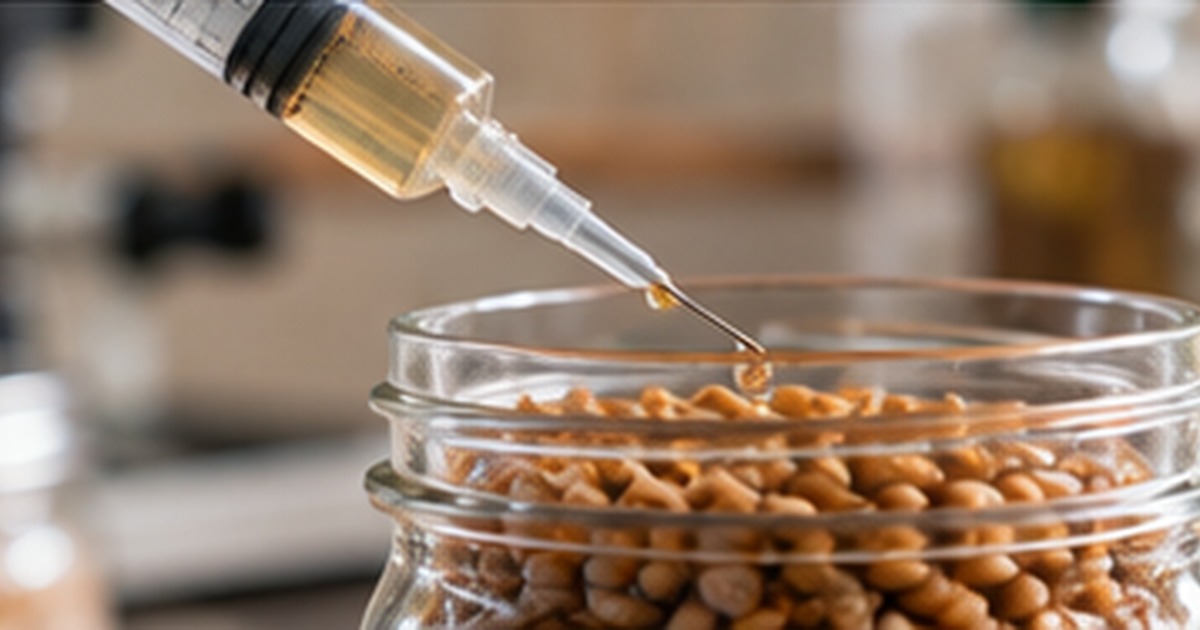
Liquid culture is one of the quickest and most reliable ways to start growing gourmet mushrooms at home. It is living mycelium suspended in a sterile nutrient solution, so when you add it to sterilised grain it gets to work straight away. This guide covers edible gourmet species such as oyster, lion’s mane and shiitake.
What is liquid culture?
Liquid culture (often shortened to LC) is a sugary broth, usually made with honey, light malt extract or dextrose, that has been sterilised and then inoculated with a healthy strain of mushroom mycelium. Over a couple of weeks the mycelium grows into wispy white clouds through the liquid. A syringe of LC contains thousands of tiny fragments of that mycelium, each able to start colonising grain.
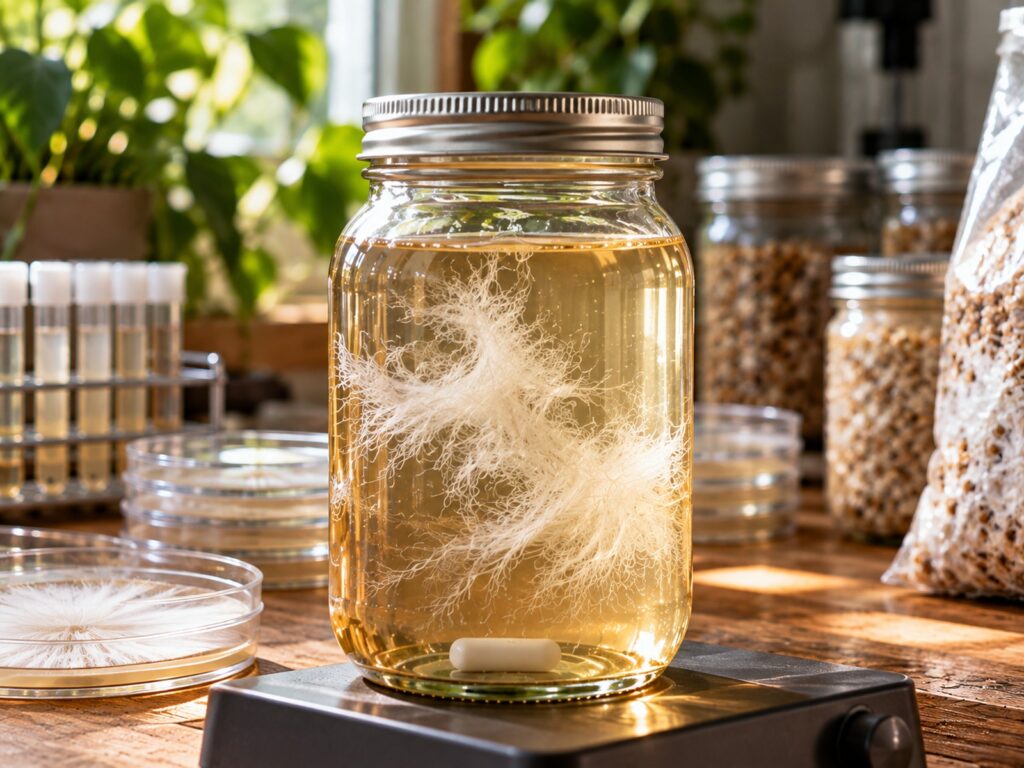
Compared with starting from spores, liquid culture is faster, because the mycelium is already established, and more predictable, because every fragment comes from the same strain.
What you’ll need
- A syringe of gourmet liquid culture
- Sterilised grain in jars or filter-patch bags with a self-healing injection port
- A clean workspace, ideally a still air box
- 70% isopropyl alcohol and paper towels
- Disposable gloves and a lighter or alcohol wipes for the needle
Step 1: Prepare a clean workspace
Contamination from mould spores and bacteria in the air is the main reason home grows fail. Work in a still room with windows closed and fans off. A still air box, a clear plastic tub with arm holes, stops air currents carrying contaminants onto your jars. Wipe down the inside of the box, your gloves and the outside of your jars with 70% alcohol before you start.
Step 2: Prepare the syringe
Shake the liquid culture syringe gently to break up the mycelium so it is evenly spread. Attach the sterile needle without touching the tip. Wipe the needle with an alcohol wipe, or flame it until it glows red and let it cool for a few seconds.
Step 3: Inoculate the grain
Wipe the injection port with alcohol, push the needle through and inject around 1 to 3ml of culture per jar, or 3 to 5ml per bag. Withdraw the needle, wipe it again, and move to the next jar. Using a little more culture usually means faster colonisation and less chance for contaminants to take hold.
Step 4: Incubate
Keep the jars somewhere dark and stable, at roughly 20 to 24°C for most gourmet species. Within a few days you should see white mycelium spreading out from the injection points. Once it covers around a third of the jar, give it a gentle shake to spread the colonised grain and speed things up. Most jars are fully colonised in two to four weeks.
Spotting contamination
Healthy mycelium is bright white and fluffy or rope-like. Be wary of green, blue-grey, black or pink patches, slimy or wet-looking grain, and sour or rotten smells. A contaminated jar should not be opened indoors. Seal it in a bag and dispose of it, or sterilise it before cleaning. Some species, like lion’s mane, grow thinner and wispier mycelium than oyster, which is normal.
What next?
Fully colonised grain, known as grain spawn, can be mixed into a bulk substrate such as hardwood sawdust or straw, depending on the species, and then moved into fruiting conditions. Our guide to growing lion’s mane at home walks through that stage.
Store unused liquid culture in the fridge (2 to 8°C) and use it within a few months. This guide is for edible gourmet species only.
Leave a Reply