
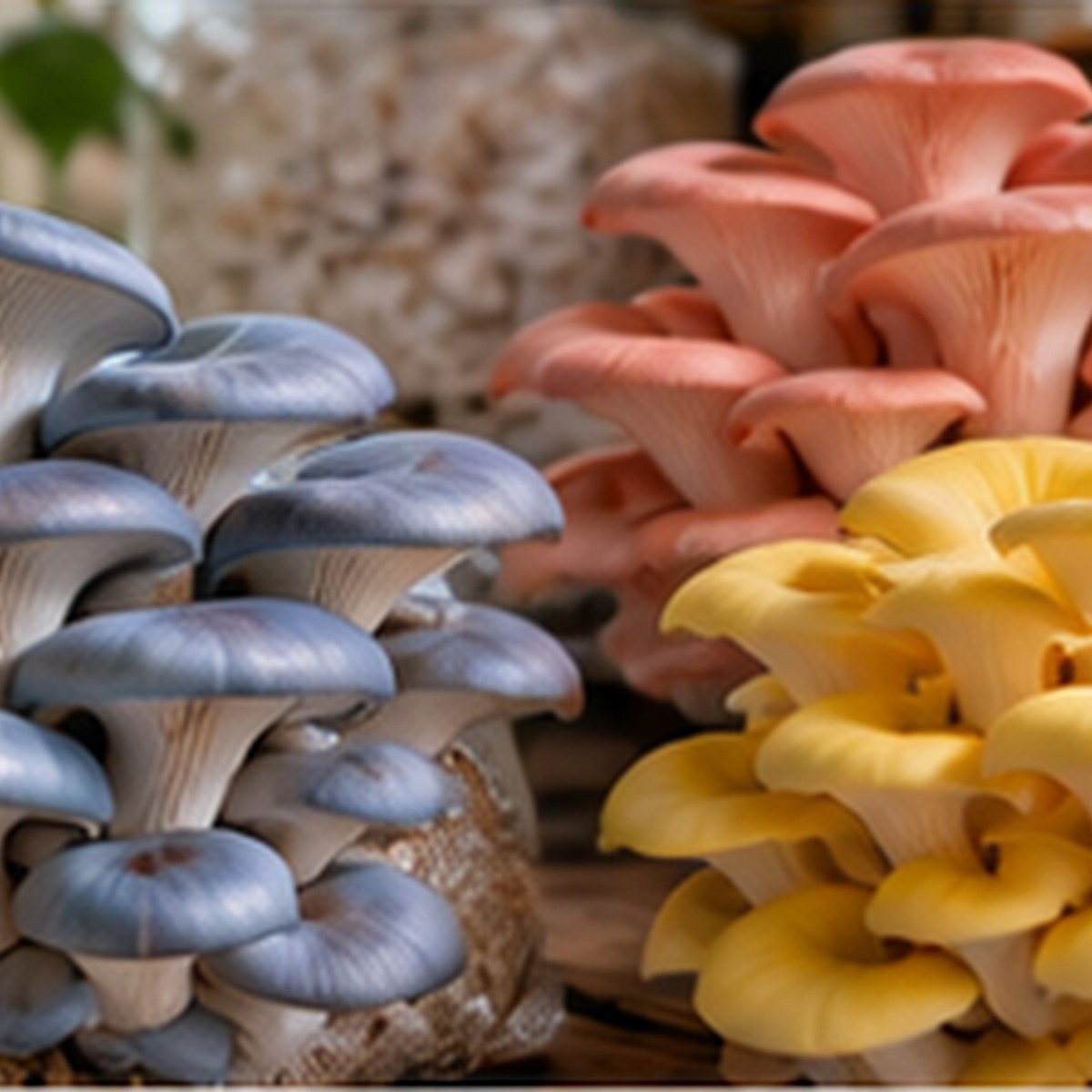
Cloning is one of the most satisfying techniques in home mycology. By taking a tiny piece of tissue from inside a healthy mushroom and growing it on agar, you get a culture that is genetically identical to that mushroom. If you grow, buy or find a particularly fine oyster, shiitake or lion’s mane, cloning lets you keep growing it.
Why clone?
- Predictable results: unlike spores, which create many different strains, a clone reproduces one known strain.
- Selection: you can pick the biggest, fastest or best-tasting mushroom from a harvest and carry it forward.
- Preservation: a clone stored on agar slants keeps a favourite strain going for years.
Choosing a mushroom
Choose a young, firm, fresh mushroom with no slime, bruising or insect damage. For capped species like oyster and shiitake, a specimen just before the cap fully opens works best. Shop-bought gourmet mushrooms can work, but the fresher the better. Clone soon after picking.
What you’ll need
- Prepared, tested agar plates (see our agar guide)
- A still air box or flow hood
- A scalpel, a lighter or alcohol lamp, and 70% alcohol
- Gloves, Parafilm and a marker pen
Step by step
1. Clean the outside. Gently wipe the mushroom with a paper towel lightly dampened with alcohol, or with a very dilute hydrogen peroxide solution. The outside carries contaminants, while the inside is usually clean.
2. Open it without touching the inside. Inside the still air box, tear the mushroom in half by hand rather than cutting it. Tearing exposes fresh internal tissue that no blade or glove has touched.
3. Take a sample. Flame the scalpel until it glows red, let it cool for a few seconds, then cut a piece of interior tissue about the size of a grain of rice. The best spot is the inner flesh where the stem meets the cap. For lion’s mane, take tissue from the dense centre, well away from the spines.
4. Place it on agar. Lift the lid of a plate just enough, set the tissue in the centre, and close it. Sterilise the scalpel again before each sample. Make several plates from the same mushroom, as not all will stay clean.
5. Seal and incubate. Wrap the plates with Parafilm, label them with the species and date, and incubate them upside down at around 20 to 24°C.
What to expect
Within two to seven days, fine white mycelium should start growing outwards from the tissue. Oyster is usually fastest, while lion’s mane and shiitake take a little longer. If you see mould or bacteria on some plates, ignore them and work only with the clean ones.
Cleaning up the culture
Once the mycelium has grown a centimetre or two, transfer a small wedge from the clean leading edge to a fresh plate. One or two transfers usually give a fully clean culture, which you can use for grain spawn or liquid culture, or store on slants.
A note on senescence
Each time a culture is transferred it ages a little. After many generations, cultures can lose vigour, a process called senescence. To avoid this, keep an early-generation “master” culture on slants in the fridge and make working cultures from it, rather than cloning clones repeatedly.
This guide covers edible gourmet species only. Cultivating psilocybin-containing mushrooms is illegal in the UK, and our microscopy spore samples are not sold for cultivation.
Leave a Reply