
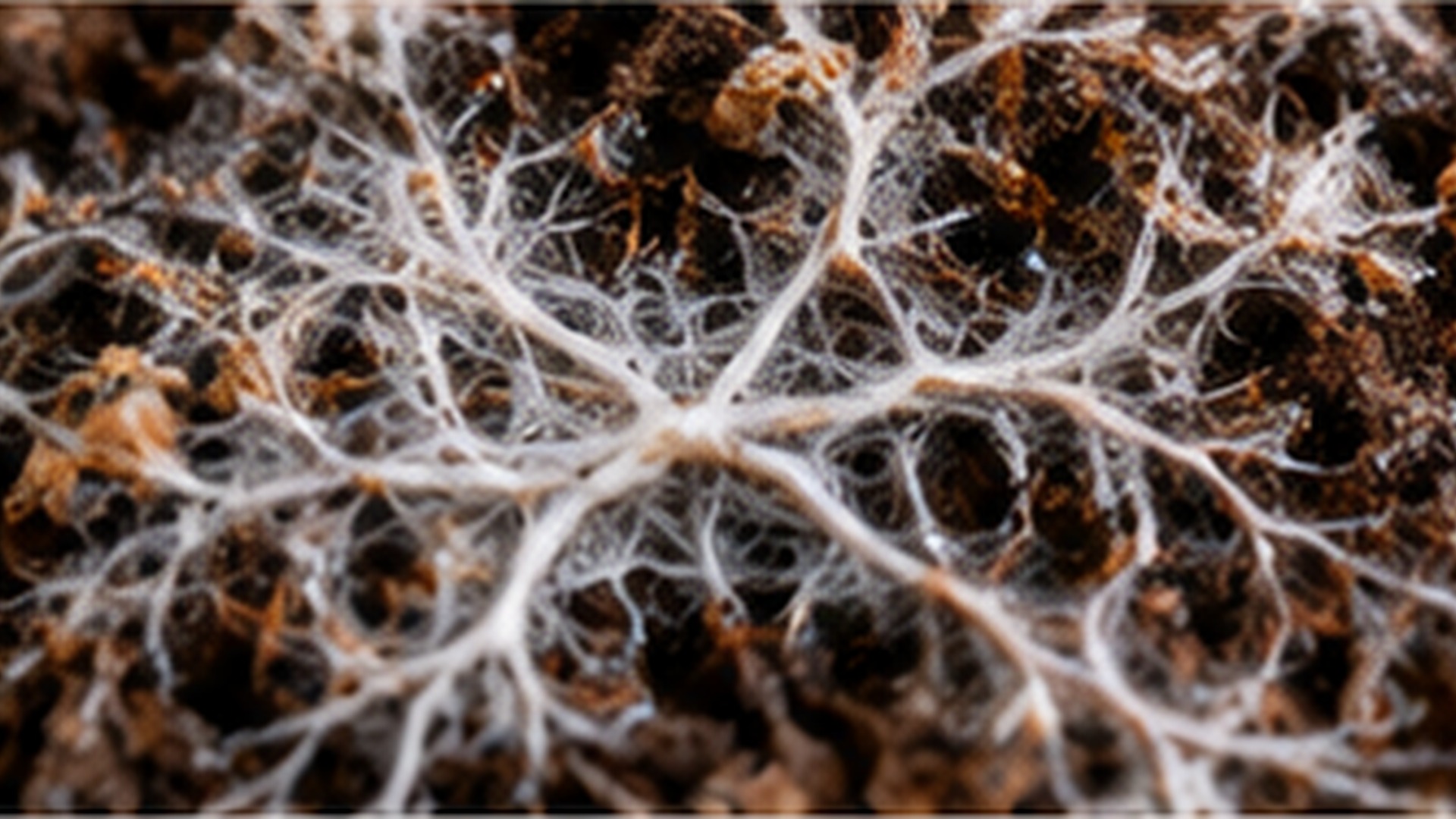
If you have looked at mushroom supplements, you will have seen the phrases “fruiting body” and “mycelium” on labels. They are two different parts of the same organism, and products made from each can be quite different. This article explains what they are, how they differ, and what to look for when you buy.
Two parts of one organism
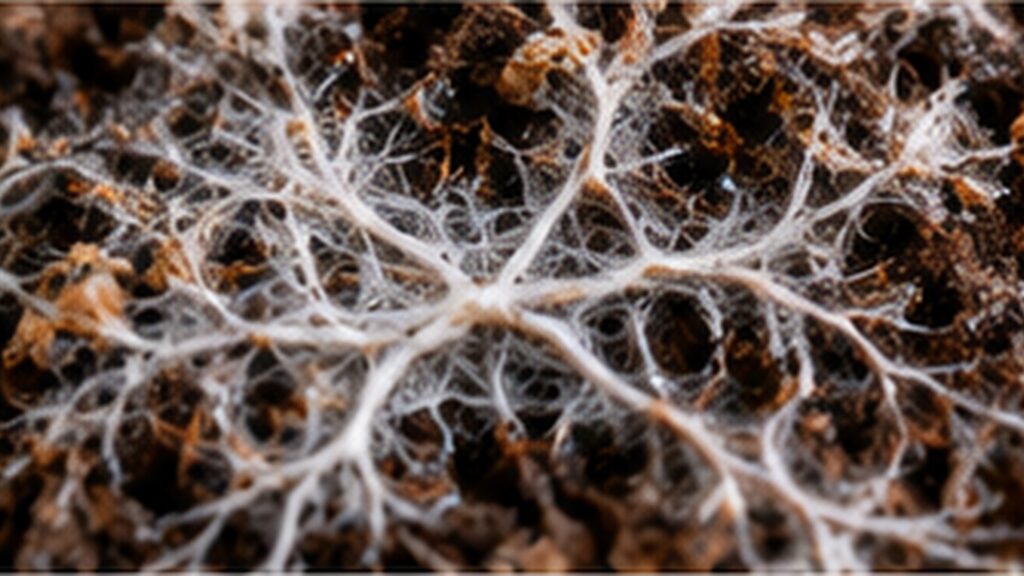
A fungus spends most of its life as mycelium: a network of fine, branching threads called hyphae that grows through soil, wood or another food source, digesting it as it goes. Most of the time it is hidden from view.
When conditions are right, the mycelium produces a fruiting body, the structure we call a mushroom. Its job is reproduction: it develops and releases spores. A useful comparison is an apple tree. The mycelium is like the roots and trunk, and the fruiting body is like the apple.
How mycelium products are usually made
Commercially, mycelium is often grown on sterilised grain such as oats or rice. It is quicker and cheaper to produce than fruiting bodies. The catch is that the mycelium cannot easily be separated from the grain it grew on, so many “mycelium on grain” products are ground up with that grain included. Independent analyses have found that some of these products contain large amounts of starch from the grain and comparatively low levels of the fungal compounds people are looking for.
How the composition differs
Fruiting bodies and mycelium share many compounds, but not in the same amounts, and some are found mainly in one or the other:
- Beta-glucans, a group of polysaccharides in fungal cell walls, are generally abundant in fruiting bodies.
- Triterpenes, such as the ganoderic acids in reishi, are concentrated in the fruiting body.
- Some compounds are mycelium-specific. In lion’s mane, for example, hericenones are found in the fruiting body, while erinacines are found mainly in the mycelium. It is not as simple as one part being “good” and the other “bad”.
The bigger practical issue is usually not the mycelium itself, but how much of a product is actually fungus rather than the grain it was grown on.
Why we use fruiting bodies
Our tinctures are made from mushroom fruiting bodies. That means what goes into the extraction is the mushroom itself, with no grain filler, and it reflects how these mushrooms have traditionally been used. We then dual extract them, using hot water and alcohol, because fungal cell walls are made of tough chitin that needs heat to break down. You can read more about that in our article on dual extraction.
What to look for on a label
- Whether it says fruiting body, mycelium or mycelium on grain. If it does not say, ask.
- The Latin name of the species, such as Hericium erinaceus for lion’s mane.
- Whether it is an extract or simply dried, ground mushroom, and if an extract, how it was made.
- Clear directions for use and a named UK seller you can contact.
This article is for general information. Food supplements are not intended to diagnose, treat, cure or prevent any disease, and are not a substitute for a varied, balanced diet and healthy lifestyle.
Leave a Reply