
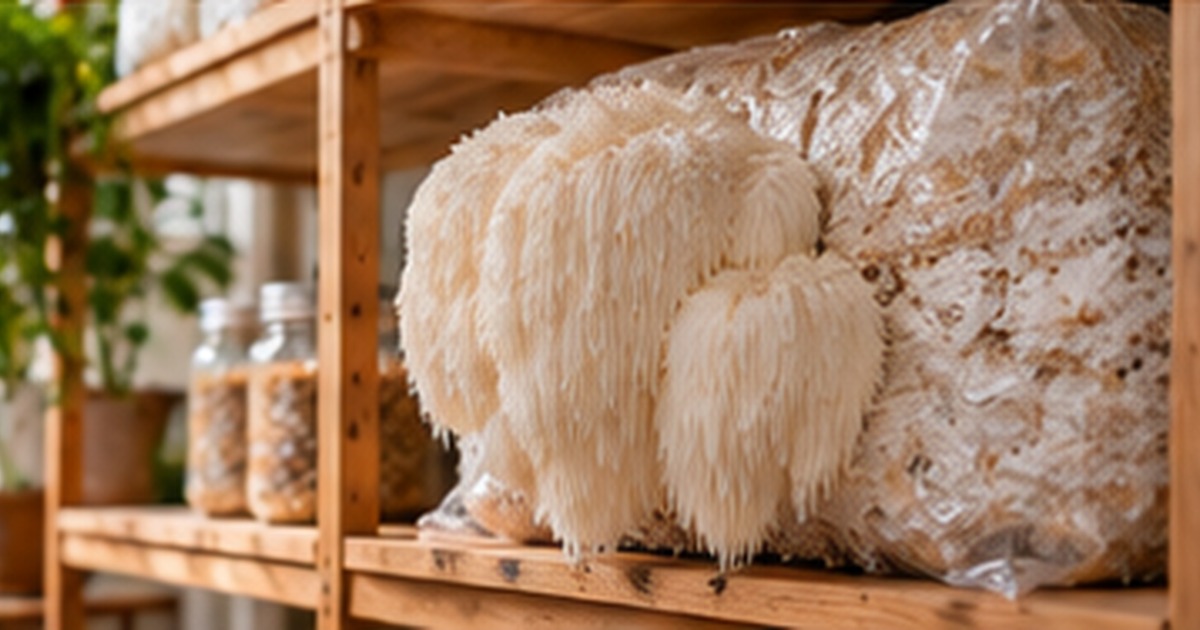
Once your substrate is fully colonised, mushrooms need a change of environment to fruit. A fruiting chamber is simply a space where you can keep humidity high while still giving the mushrooms fresh air and some light. This guide covers three set-ups for gourmet species such as oyster, lion’s mane and shiitake, from the simplest to the most productive.
What mushrooms need to fruit
- Humidity: usually 85 to 95% relative humidity, so the developing mushrooms do not dry out.
- Fresh air: mushrooms breathe out carbon dioxide. High CO2 causes long stems, small caps or, in lion’s mane, coral-like branching.
- Light: not for energy, but as a signal to fruit and grow in the right direction. Indirect daylight or a cool LED on a 12-hour timer is plenty.
- Temperature: most gourmet species fruit between 15 and 24°C. Oysters vary by type: pink oysters like warmth, while blue and grey oysters prefer it cooler.
The challenge is that humidity and fresh air pull in opposite directions: more air exchange dries things out. Every design below is a way of balancing the two.
Option 1: The humidity tent (one or two blocks)
The simplest option. Place a colonised block on a plate and cover it loosely with a large clear plastic bag or an upturned clear storage tub, leaving the bottom open. Mist the inside of the bag once or twice a day, and lift it to fan fresh air in when you mist. This works well for grow kits and single bags.
Option 2: The shotgun fruiting chamber (several blocks)
Take a clear plastic storage tub of 50 to 100 litres and drill 6mm holes about 5cm apart over every side, the base and the lid. Fill the bottom with a few centimetres of damp perlite, which slowly releases moisture. Stand the tub on blocks so air can enter from underneath, set your colonised blocks on a rack above the perlite, and mist the walls daily. The holes allow passive air exchange while the perlite keeps humidity up.
Option 3: The “martha” tent (regular production)
A martha is a mini greenhouse, the kind with a wire shelving frame and a zip-up plastic cover. Put an ultrasonic humidifier at the bottom connected to a humidity controller, plus a small fan on a timer for fresh air exchange. Line the shelves with grates or perforated trays so air circulates. This set-up can hold a dozen or more blocks and runs almost hands-free once tuned.
Getting the balance right
- Caps cracking or edges drying: humidity too low. Mist more often or add more perlite.
- Long stems and small caps: too much CO2. Fan more often or add holes.
- Water pooling on mushrooms or slimy patches: too wet and not enough airflow. Mist the walls, not the mushrooms, and increase fresh air.
- No pins forming: check temperature and light, and try a cold shock by putting the block in the fridge overnight.
A note on oyster spores
Oyster mushrooms release large amounts of spores as they mature, which can irritate the lungs of some people when grown indoors in large quantities. Harvest oysters before the caps flatten out fully, and consider fruiting them in a well-ventilated space rather than a bedroom.
This guide covers edible gourmet species only. Cultivating psilocybin-containing mushrooms is illegal in the UK, and our microscopy spore samples are not sold for cultivation.
Leave a Reply