
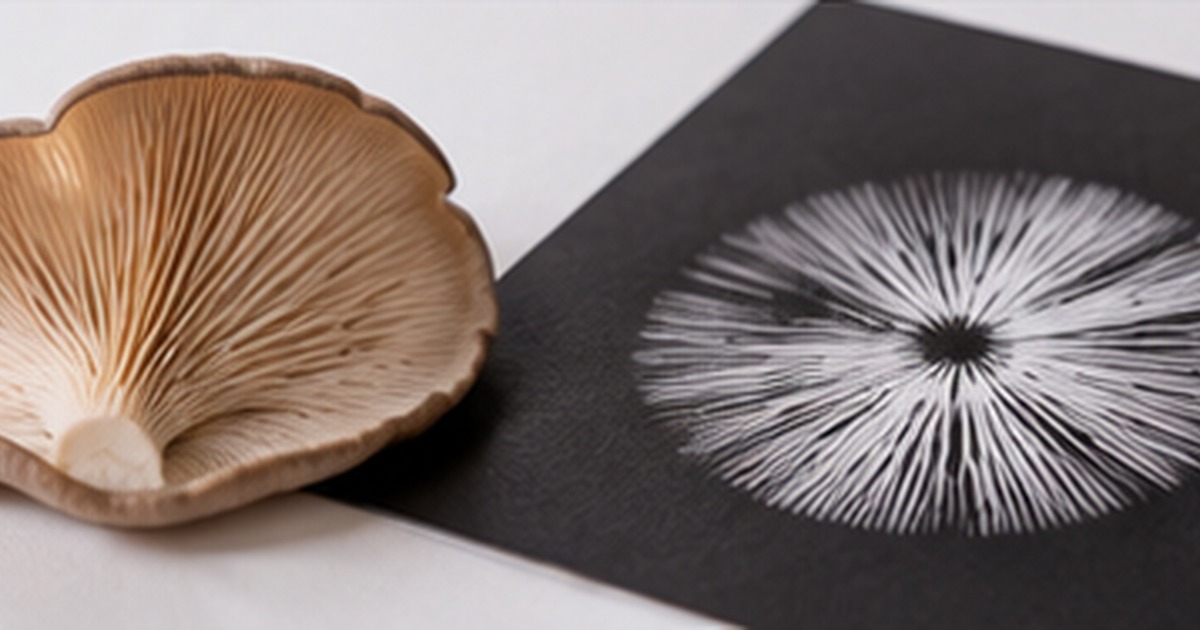
A spore print is the pattern a mushroom leaves when it drops its spores onto paper or glass. It is one of the oldest tools in mycology: spore colour is an important clue when identifying a species, and a good print is beautiful in its own right. All you need is a fresh, mature mushroom and a night’s patience.
What you’ll need
- A fresh, mature mushroom cap with open gills, such as oyster or shiitake
- Paper or foil, ideally half white and half black so both light and dark spores show up
- A glass or bowl to cover the cap
- A clean knife
Step by step
1. Choose the right mushroom. Pick one whose cap has opened enough to show the gills clearly, but which is still fresh and firm. Very young caps may not drop spores yet, and old ones may have already released most of them.
2. Remove the stem. Cut the stem off as close to the cap as you can so the gills can sit flat, just above the paper.
3. Place the cap gills-down. Lay it across the line between the white and black halves of the paper. For side-growing species like oyster, lay the cap so the gills face down as evenly as possible.
4. Cover and wait. Put a glass or bowl over the cap to stop draughts scattering the spores and to keep the cap from drying out. Leave it somewhere undisturbed for 6 to 24 hours.
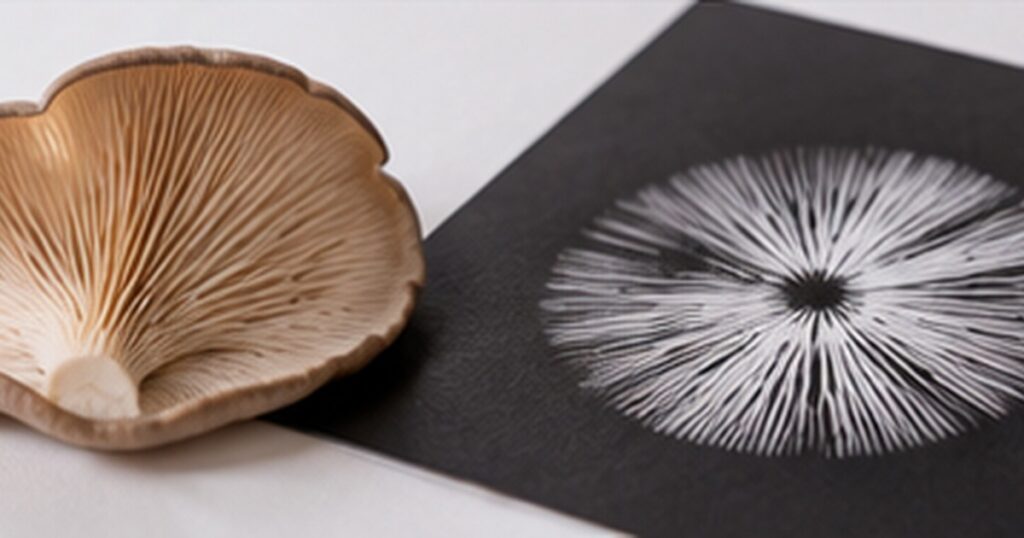
5. Lift carefully. Remove the cover and lift the cap straight up. You should see a print that mirrors the pattern of the gills.
Reading your print
Spore colour varies from species to species. Oyster mushrooms usually leave a white to pale lilac print, shiitake a white print, and many field mushrooms a chocolate brown one. Under a microscope, you can also look at the size and shape of individual spores, which is often needed to separate similar species.
Spore colour alone is never enough to decide whether a wild mushroom is safe to eat. Several deadly species have white spore prints. If you forage, use several features together and check with an experienced local expert.
Keeping your prints
Let the print dry for an hour, then fold the paper over or slide it into a small sealed bag. Label it with the species and date and store it somewhere cool, dry and dark. Prints on foil are cleaner to work with than paper if you plan to examine the spores later.
Tips for a sharper print
- Add a drop of water on top of the cap if it seems dry. This encourages spore release.
- Keep the cap level so the print is even and does not smudge.
- Use a clean surface and wash your hands first, especially if you plan to examine the print under a microscope.
Leave a Reply